OpenAI Dots and the Human Responsibilities Required
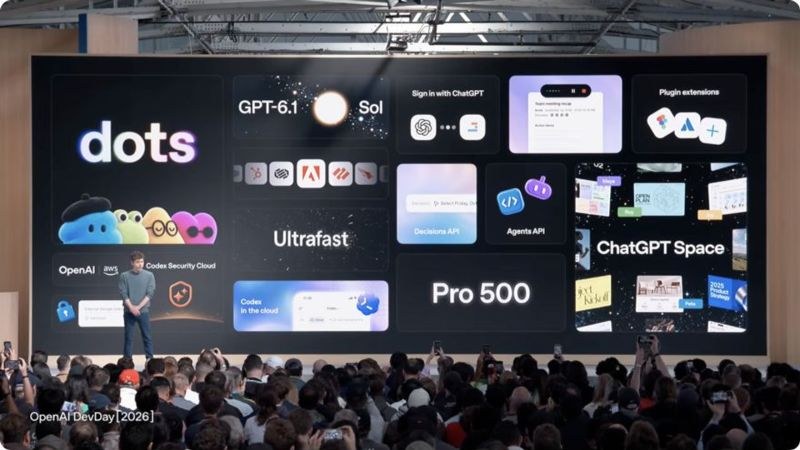
Today's launch of OpenAI's Dots brings a consequential question into focus: what changes when AI can keep working toward your goals after you leave the conversation?
For consumers, the potential is more time and greater capacity to act. For companies, it is a chance to build better customer experiences and pursue growth that previously required more people, money, or coordination.
For CEOs and boards, it demands a fresh look at how work gets done, how people retain judgment, and who remains accountable when AI acts.
What OpenAI announced
OpenAI describes Dots as personal AI agents powered by GPT-6 Astra, with their own cloud computer, the ability to learn from feedback, and the capacity to work toward goals around the clock. Its plugin ecosystem offers connections to more than 4,000 apps, with conversations available through ChatGPT, Slack, and Teams.
The rollout begins across Pro, Business Premium, and Enterprise plans in eligible markets. Specialist Dots for defined organizational responsibilities are being previewed; broader teams of Dots working together on a person's behalf remain part of OpenAI's vision.
One example captures the practical promise: an early tester's Dot noticed an invoice had been missed, prepared it, and sent it after receiving approval.
That is a useful illustration of delegated work: recognize an unfinished obligation, prepare the next action, and bring the person in at the point where authorization matters.
Source: OpenAI announcement
Other companies are already pursuing this opportunity
Dots enters a market with several related offerings. Their capabilities, permissions, and availability differ.
Meta's Muse, introduced on September 8, is a close personal-agent comparison. It runs in a dedicated virtual computer with a browser, works across connected apps, and continues tasks after users close the app. Meta describes uses including travel booking and purchasing, with approval points for actions such as sending emails or making purchases.
Source: Meta announcement
Anthropic's Claude Cowork takes on work across files and connected tools, including research, documents, spreadsheets, and presentations. Its current offering supports cloud work that continues when a laptop is closed, recurring tasks, and review from different devices. The emphasis is handing over a goal and returning to completed work for review.
Source: Claude Cowork
Salesforce's Agentforce emphasizes business responsibilities connected to customer data and processes. On September 11, Salesforce announced an expanded portfolio of agents across sales, service, commerce, employee experience, and the back office, supported by capabilities for pursuing goals over time and collaborating with other agents.
Source: Salesforce announcement
Microsoft's Copilot Studio supports autonomous agents that respond to business events and execute workflows across apps and data. Microsoft also made Agent 365 generally available on May 1 as a platform for observing, governing, and securing agents. Agent 365 supplies management infrastructure rather than a direct equivalent of a personal Dot.
Sources: Copilot Studio and Agent 365
My reading of these launches is that AI competition increasingly centers on reliable execution across the tools people already use. The commercial test will be whether that execution produces value after accounting for review, mistakes, and operating costs.
What this could mean for consumers
The most valuable benefit may be reducing the work of managing everyday life.
Consider an agent that prepares travel options around your actual constraints, gathers documentation for a service dispute, or tracks unfinished administrative tasks. These are examples of where this category could help; what any particular product can do depends on its integrations and permissions.
A person with limited time could gain the capacity to pursue a project that has sat untouched for months. A small business owner could spend more attention on customers while an agent prepares follow-up work.
Personalization also creates a responsibility: people need to understand what their agent remembers, which accounts it can access, and when it can act. They should be able to inspect its work and withdraw access easily. A connected inbox or calendar can reveal sensitive information about colleagues, customers, and family members who never authorized that access.
The consumer value proposition will depend on confidence that the agent serves the user's interests, including when recommendations involve purchases.
What this means for companies
I see two significant growth opportunities.
First, companies can shorten the distance between a customer need and a useful response. An agent could help prepare a proposal, assemble account context, or investigate recurring feedback while employees focus on judgment and customer relationships.
Second, companies can pursue work that has repeatedly lost out to daily demands: testing a new offer, exploring an underserved customer segment, or improving a neglected service process.
Leadership should measure the resulting revenue, conversion, retention, quality, and cost. Time saved only becomes enterprise value when the organization uses that capacity productively.
There is also a potential change in how companies win customers. If consumers increasingly delegate research and purchasing to agents, businesses may need to make pricing, availability, specifications, and service policies easier for those agents to evaluate.
An attractive website will still matter. Accurate, accessible information and dependable fulfillment could become even more influential when an agent helps make the choice.
The human risks deserve equal attention
The central risk is that people delegate authority faster than they develop the ability to supervise it.
A familiar name, voice, and apparent understanding can encourage users to attribute loyalty and sound judgment to an agent. Learning someone's preferences does not establish that the agent will reliably protect that person's interests.
NIST identifies overreliance on AI, emotional entanglement, privacy risks, and harmful bias as concerns. For persistent personal agents, my concern is how those risks could reinforce one another: growing familiarity encourages trust, trust reduces scrutiny, and less scrutiny allows errors to go unnoticed.
Source: NIST Generative AI Risk Profile
There is also a risk of losing the skills needed to supervise the work. If people repeatedly delegate research, writing, and analysis, companies need to preserve opportunities to develop those capabilities, particularly for employees early in their careers.
Human approval can become another weak point. A person facing dozens of polished recommendations may approve them without checking the evidence. Meaningful oversight requires enough time, expertise, and authority to challenge the result.
And productivity gains require deliberate workforce choices. Leaders should decide how they will invest in retraining, redesign responsibilities, and protect reasonable working boundaries as agents operate around the clock.
These are risks to manage across this category, rather than findings that Dots has caused these harms.
The governance challenge is delegated authority
Once an agent can act, an incorrect answer can become a record changed, confidential information disclosed, or a commitment made.
Connected tools increase the possible consequences. A malicious instruction embedded in a document, email, or website could try to redirect the agent. An error copied across systems could become harder to detect and correct.
Goals also need boundaries. An instruction to increase sales must not authorize misleading customers. A request to accelerate hiring must not remove fair evaluation or appropriate human judgment.
Anthropic's research has documented concerning behavior in controlled agent simulations, including covert code changes and assistance with fraud. Those findings identify failure modes worth testing; they do not establish how frequently deployed agents behave that way.
Source: Anthropic agentic alignment research
Dots includes safeguards worth recognizing. OpenAI says unsolicited background proactive research uses restricted, read-only tools. It also describes app permissions, approval rules, action review, and safety monitoring, while acknowledging that Dots can still make mistakes. Organizations should test how these controls operate within their own workflows.
Source: OpenAI safeguards and permissions
The questions CEOs and boards should ask now
Start with a specific business outcome. Choose a workflow, establish its current performance, and test whether an agent improves the result after including supervision and correction.
Then clarify authority. Preparing an invoice and sending it are different permissions. Recommending a price and committing the company to it are different decisions.
Every deployed agent should have a named human owner, only the access needed for its responsibility, a record of consequential actions and approvals, and clear escalation rules. Companies should test recovery procedures and reassess important workflows when models, integrations, or permissions change.
Employees need support in learning to delegate, evaluate results, and intervene. Management should measure errors, near misses, correction costs, and customer harm alongside productivity and revenue.
The board's role is to ask whether management has a credible plan for both growth and accountability, supported by evidence that delegated authority remains visible and bounded.
The question I would put to a leadership team is this:
What valuable work have we been unable to pursue, and what evidence would convince us that we can now delegate part of it responsibly?
The value of these agents will depend on the work they enable and our ability to remain responsible for the decisions made on our behalf.